
#81 Awake Intubation
Welcome back to another airway episode! On this episode, Cyrus and Nick are joined by Dr. Jarrod Mosier to discuss advanced concepts of airway management to include a practical and effective approach to awake intubation. We will discuss who is an appropriate candidate for this technique, why and when it should be implemented and cover some important pitfalls and pearls. We hope you guys enjoy this episode and that it motivates you to check out the Difficult Airway Course: Critical Care! If you are interested, make sure you use our discount code CCTIME26 to get $200 off the November course in San Diego!
Our Guest
Jarrod Mosier, MD
Professor of Emergency Medicine and Medicine at the University of Arizona College of Medicine-Tucson.
The Physiologically Difficult Airway

Infographic on Physiologically Difficult Airway
Many peri-intubation complications occur despite first-pass success, including:
Severe hypoxemia
Hypotension and cardiovascular collapse
Worsening acidosis
Cardiac arrest
The problem is often physiology—not technique.
Phenotypes of the Physiologically Difficult Airway
Hypoxemia
ARDS, pneumonia, pulmonary edema
Shunt physiology → minimal oxygen reserve
Even optimal preoxygenation may fail
Many patients have no safe apnea time
Hypotension / Shock
Induction + positive pressure → ↓ preload, ↓ cardiac output
Shock Index (HR/SBP) > 0.8 predicts this phenotype. Importantly, even subtle shock matters, for example: HR 100/SBP 100 yields a Shock index of 1.0
Severe Metabolic Acidosis
Tachypnea = life-sustaining compensation
Paralysis → abrupt loss of ventilation → rapid decompensation
Right Ventricular Failure
Positive pressure → ↑ RV afterload
Septal shift → ↓ LV filling → collapse
Additional Phenotypes
Pregnancy
Elevated ICP
Full stomach / aspiration risk
See our prior episode for more:
Preoxygenation: Necessary but Not Sufficient
Key Trials
PREOXI: NIPPV effective
FLORALI-2: NIPPV may outperform HFNC
Key Takeaways
Preoxygenation ≠ guaranteed safety
Up to 25% of patients cannot tolerate apnea
Shunt physiology + high work of breathing → rapid desaturation
👉 “Preoxygenation implies induction—but not all patients are safely inducible.”
When to Pause Before RSI: Marginal oxygenation despite 100% FiO₂ on NIPPV/HFNC with high work of breathing
👉 These patients may depend on their current physiology to survive
Consider awake intubation instead of RSI
Awake Intubation
Reframing Awake Intubation
Traditional Role: Difficult anatomy
Modern Role: Physiologically dangerous airway
Why It’s Underused
Skill decay
Clinician discomfort/Cognitive bias
Paradox: The highest-risk patients need the least-practiced skill
“This mismatch between what guidelines recommend and what clinicians feel comfortable doing creates a profound human factors paradox. While awake tracheal intubation is practiced less commonly, all guidelines now recommend it in these highest risk patients, yet there is significant hesitation clinically. The highest risk patients are those that require the least-practiced skill.”
Who Should Trigger Awake Intubation?
Refractory hypoxemia
Severe metabolic acidosis
RV failure / pulmonary hypertension
Marginal oxygenation or acidosis despite Extreme work of breathing
These are patients who are surviving because of their current physiology
Awake Intubation: Practical Approach
1. Decide Early
Best done before decompensation.
Anyone should be able to safely suggest “would awake intubation be safer here?”
2. Set Expectations
Explicitly tell team and patient: “We are doing an awake intubation”
Explain to the patient what this means.
3. Position & Oxygenation
Upright or semi-upright
Continue effective oxygen strategy; often HFNC
4. Preparation
Primary + backup airway devices
Suction
Capnography
Bronchoscope/Endoscope
ETT tubes (lubed and tested)
Equipment for topicalization
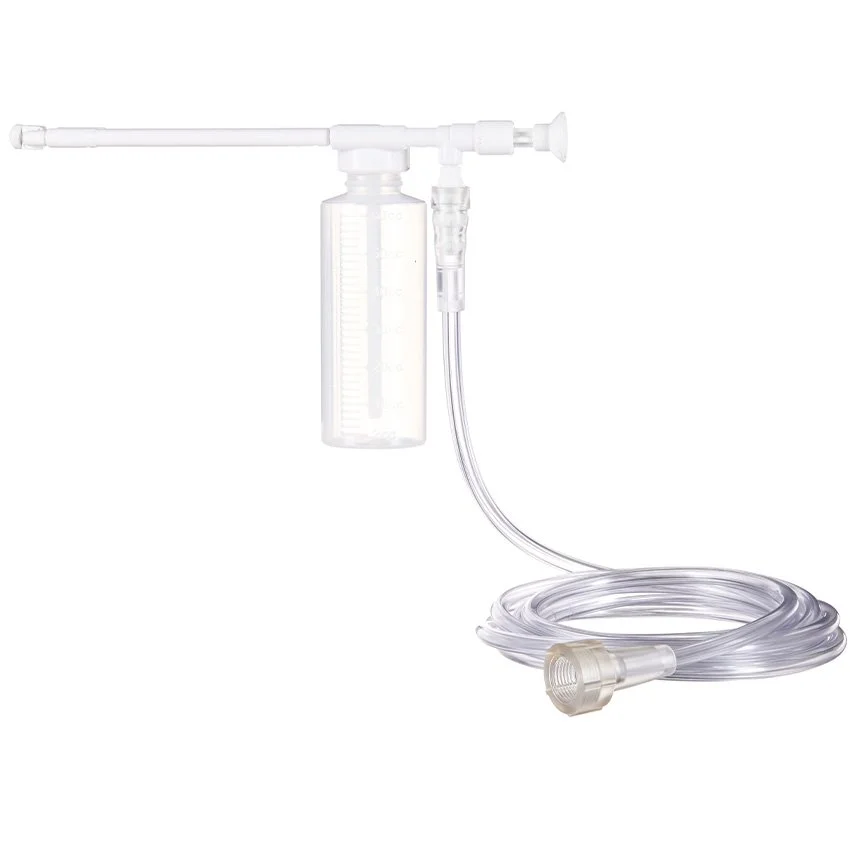
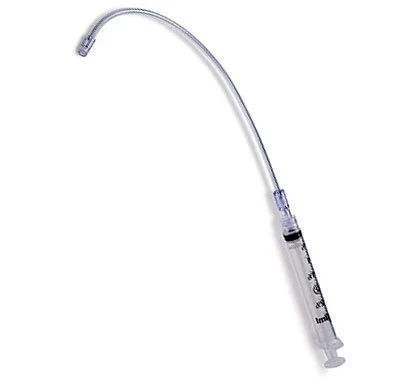
Atomizer!
Lidocaine 4% aqueous solution
Lidocaine 5% cream
Equipment for rescue plan (typically RSI) VL setup and ready, bougie, etc
5. Technique Selection
Flexible scope vs video laryngoscopy
Based on anatomy + operator skill
Flexible scope often better tolerated
6. Topicalization (Critical Step)
Dry the airway: glycopyrrolate 0.005 mg/kg typically 0.2 - 0.4 mg IV
First pass atomized lidocaine
Atomized not nebulized: “Nebulized lidocaine will not contribute in any meaningful way to airway topicalization… and a large but variable fraction is exhaled…unpredictably increasing the risk of systemic toxicity.”
Atomize using 4% aqueous lidocaine
5% Lidocaine ointment to “butter the tongue” using a tongue depressor
“Liquifies as it warms and drips down into the base of the palatopharyngeal arches where it penetrates the mucosa and reaches the glossopharyngeal nerve.” Also gets into the valecula, epiglottis, and pyriform recesses, it may also block the superior laryngeal nerve.
Second pass atomized lidocaine
Test depth of analgesia by touching back of throat. If poorly tolerated add additional topicalization
Remember: Max Lidocaine Dose: ~9 mg/kg (lean body weight)
👉 Most common error: under-topicalization
Examples of atomizers:
7. Sedation Strategy
Minimal or none if well topicalized; “If topicalization is adequate, many patients require no sedation… however the opposite is not true… There is no amount of sedation or dissociation that removes the requirement for topicalization.”
Preserve: Spontaneous breathing & Cooperation
8. Tube Placement
Without continuous coaching throughout:
With ETT loaded on the bronchoscope, hold the scope with two fingers and rest your hand against the patients face. Advance slowly.
Apply additional topicalization to the vocal cords through the scope.
Slide scope through the cords and advance the ETT over it.
If the tube hangs on the cords, gentle counter-clockwise rotation is often sufficient to guide it through.
9. Post-Intubation Transition
Push medications, connect to ventilator
Remember that physiology remains fragile, ensure adequate minute ventilation.
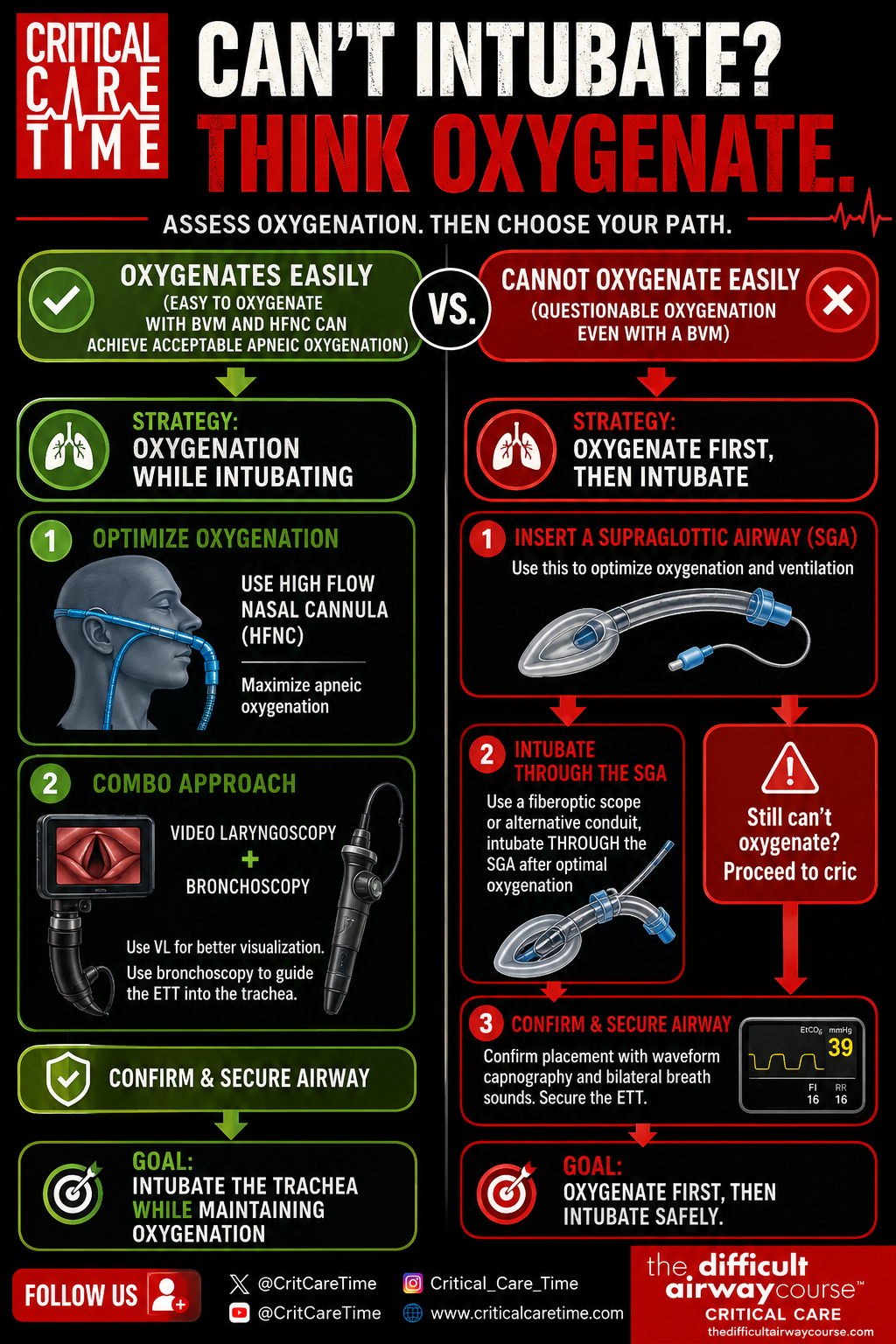
Human Factors & Cognitive Bias
Why we default to RSI:
Familiarity
Speed
Comfort
Biases at play:
Availability bias
Affect heuristic
Prospect theory
Groupthink
👉 Key insight: Clinician comfort ≠ patient safety
Training Implications
Awake intubation is a perishable skill
Requires:
Simulation
Deliberate practice
Cognitive rehearsal
👉 This is as much decision-making as procedural skill
Be sure to Check Out Dr. Mosier’s new Book: Clinical ECMO Management: A Case-Based Approach
Sponsored by The Difficult Airway Course: Critical Care

-
BOUGIE Trial (2021): A multicenter RCT of 1,102 critically ill adults comparing a bougie-first strategy versus an endotracheal tube with stylet-first. It found no significant difference in first-attempt success rates (80.4% bougie vs. 83.0% stylet) and highlighted that bougie-first use could be associated with longer intubation times and higher rates of severe hypoxemia.
PREOXI trial (2024) established that preoxygenation with noninvasive ventilation (NIV/BiPAP) significantly reduces hypoxemia during the intubation of critically ill adults compared to a standard oxygen mask
-
The Physiologically Difficult Airway
The Anatomically Difficult Airway Part 1
The Anatomically Difficult Airway Part 2
-