
#77 Zorses & Hebras Part II
Ask and you shall receive! This week Nick & Cyrus bring back Zorses & Hebras from Season 1 - this time focusing on allergy and allergy-related concepts. Give it a listen and let us know what you think! Huge thanks to Integration Health for sponsoring this episode!
“When you hear hoofbeats…”
In Season 1, we introduced the concept of horses, zebras, zorses, and hebras as a way to think about diagnostic reasoning in medicine.
Most clinicians are familiar with the classic teaching:
"When you hear hoofbeats, think horses, not zebras."
The implication is that common diseases should be considered before rare diseases.
The problem is that real-world medicine is more complicated. Diseases are not simply common or rare, and clinicians are often poorly calibrated regarding actual disease prevalence.
This led us to introduce several additional animals:
| Animal | Definition |
|---|---|
| Zorse | more common than we think |
| Hebra | less common than we think |
| Unicorn | mostly mythical |
In this episode we apply this framework to some of the most misunderstood allergies in critical care.
Alpha-Gal Syndrome
Classification: Zorse
Rare? Not anymore!
What is Alpha-Gal?
Alpha-gal syndrome (AGS) is an acquired allergy to galactose-α-1,3-galactose, a carbohydrate found on the cells of most mammals.
Humans and other Old World primates lost the ability to synthesize alpha-gal millions of years ago. As a result, our immune systems recognize it as foreign.
This same molecule is one of the major barriers to xenotransplantation because mammalian organs transplanted into humans are rapidly recognized and attacked.

Galactose-α-1,3-galactose also know as alpha-gal
The Tick Connection
The major culprit appears to be bites from the Lone Star Tick
Tick exposure can induce production of IgE antibodies directed against alpha-gal, creating a delayed allergic response to mammalian meat and other mammalian-derived products.

Bites from the Lone star tick (Amblyomma americanum) are the most common cause of AGS
Clinical Manifestations of AGS
Patients may develop: Abdominal pain, Nausea, Diarrhea, Urticaria, Angioedema, Pruritus, or even (delayed) anaphylaxis
Unlike many food allergies, symptoms often occur 3–8 hours after ingestion, making diagnosis particularly challenging.
Why ICU Clinicians Should Care:
Alpha-gal is not just found in steak and hamburgers.
Potential sources include: Beef, Pork, Lamb, Gelatin-containing products, Dairy products, Some pharmaceuticals, Biologic products
Bioprosthetic Valves
A growing literature suggests that alpha-gal sensitization may contribute to accelerated degeneration of porcine and bovine bioprosthetic valves.
Approximately 2/3 of bioprosthetic valves are bovine 1/3 porcine
Heparin and Other Animal-Derived Products
Heparin itself does not intrinsically contain alpha-gal, but contamination with mammalian-derived components may theoretically trigger reactions in highly sensitive individuals.
How Common Is It?
Much more common than most clinicians appreciate.
34,000 suspected cases between 2010–2018
357,000 tests submitted between 2017–2022
90,018 positive tests
Positive rate: 30.5%
Recent reports suggest testing positivity increased nearly 100-fold from 2013–2024.
Historically concentrated in the southeastern United States, the Lone Star Tick is now expanding northward into New England, into New York State, further westward and increasingly into urban environments
As temperatures rise, clinicians throughout North America are likely to encounter AGS more frequently.
Alpha-Gal and Xenotransplantation
Scientists have created alpha-gal knockout pigs known as GalSafe Pig. This could revolutionize organ transplant. But they’ve also realized they can have a side hustle selling GalSafe pork.

Reference: Expanding range of the lone star tick
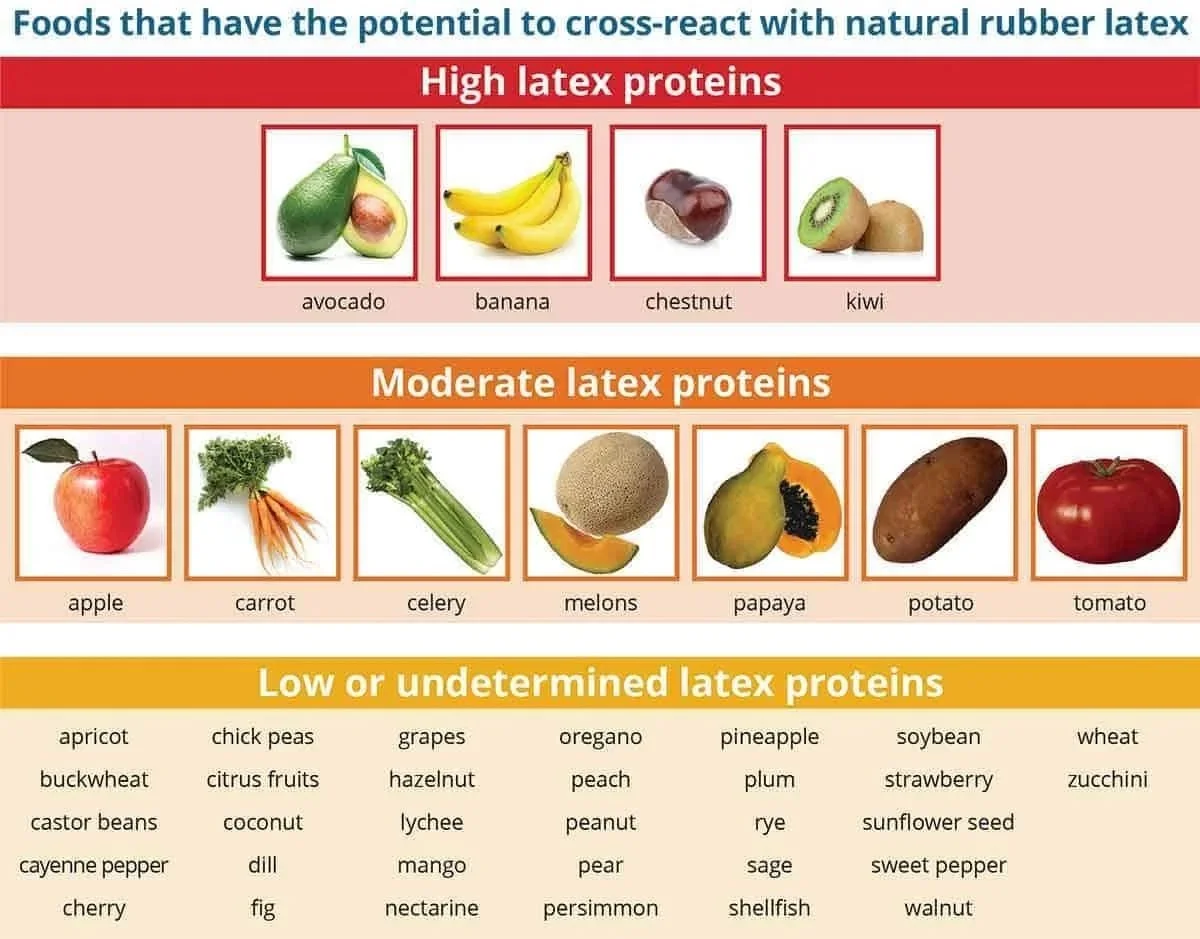
From the Allergy and Asthma Network
Latex-Fruit Syndrome
Classification: Zorse
What Is Latex-Fruit Syndrome?
Latex-fruit syndrome results from cross-reactive proteins shared between natural rubber latex and certain foods.
Most commonly associated foods:
Avocado
Banana
Kiwi
Chestnut
Additional associations:
Papaya
Mango
Pineapple
Passion fruit
Fig
Melon
Peach
Tomato
Potato
Epidemiology
Latex allergy prevalence:
Approximately 1–6% of the general population
Higher among healthcare workers
Higher among patients with repeated healthcare exposure
Among patients with latex allergy:
30–50% demonstrate fruit cross-reactivity
Among patients with fruit allergy:
Approximately 10–11% demonstrate latex sensitivity
This makes latex-fruit syndrome substantially more common than many clinicians appreciate.
Why It Matters in the ICU
Although hospitals have reduced latex exposure dramatically, latex-containing products still exist.
Examples include:
Certain Foley catheters
Some Swan-Ganz catheters
Some temporary transvenous pacing wires
Certain wound wraps including some Coban products
Pulmonary Artery Catheters and Latex
Severalcase reports describe severe anaphylaxis after PA catheter insertion:
However, a recent series of 170 latex-allergic patients undergoing right-heart catheterization reported no reactions:
Latex-fruit syndrome = Zorse
PA catheter anaphylaxis = Hebra
Key Takeaways
Tropical fruit allergies should prompt consideration of latex sensitivity.
Latex-containing medical devices still exist.
Review allergy lists carefully (including for foods!) before invasive procedures!

Propofol and Egg/Soy/Peanut Allergy
Classification: Unicorn
The Myth
Many clinicians were taught:
Egg allergy = no propofol
Soy allergy = no propofol
Peanut allergy = no propofol
Many EHR systems continue to generate warnings about this.
The Reality
Current evidence strongly supports the safety of propofol in patients with:
Egg allergy
Soy allergy
Peanut allergy
The reason lies in the chemistry.
Propofol contains Egg lecithin
Patients with egg allergy are generally allergic to egg proteins, especially ovalbumin
The allergenic proteins are not present in clinically significant amounts.
Propofol also contains refined soybean oil
Soy allergy is mediated by Soy proteins
The proteins are removed during refinement.
Propofol can rarely cause anaphylaxis.
Estimated incidence: Approximately 1 in 60,000 administrations
However, these reactions are generally unrelated to egg or soy allergy.
The American Academy of Allergy, Asthma & Immunology states that patients with egg or soy allergy can generally receive propofol without special precautions.
Interesting ICU pearl:
Propofol contains 0.005% EDTA
EDTA can chelate Zinc, Iron, and Other trace metals
Prolonged infusions (>24 hours) may contribute to trace element depletion.
A potential relationship to worse outcomes with prolonged propofol use has been hypothesized.
Key Takeaways
Egg allergy is not a contraindication to propofol.
Soy allergy is not a contraindication to propofol.
Peanut allergy is not a contraindication to propofol.
This belief is essentially a unicorn.
Shellfish Allergy and Iodine
Classification: Unicorn
The Myth
Patients are frequently told: "You can't receive contrast because you're allergic to shellfish."
Why This Is Wrong
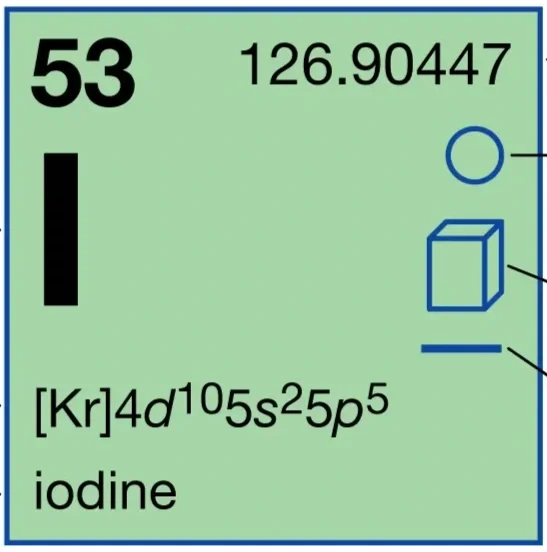
Shellfish allergy is not caused by iodine. The major allergen is Tropomyosin
Iodine is:
An essential nutrient
Required for thyroid hormone synthesis
Present throughout the environment
Humans cannot be allergic to elemental iodine itself.
If iodine allergy actually existed, eating iodized salt would be impossible.
Contrast Reactions Are Real, but these are unrelated to shellfish allergy.
However Iodine does have some interesting and important effects:
Jod-Basedow Phenomenon
Possible Zorse
Mxn: Excess iodine exposure can induce hyperthyroidism.
Sources: IV contrast, amiodarone, other medications
Incidence: 0.1% following large iodine exposures.
Wolff-Chaikoff Effect
The opposite phenomenon:
Excess iodine temporarily suppresses thyroid hormone synthesis.
Usually transient and clinically silent
Key Takeaways
Shellfish allergy does not predict contrast allergy.
Iodine allergy is essentially a unicorn.
Remember Jod-Basedow syndrome after major iodine exposure.
Sulfa Allergy
Classification: Hebra (bordering on Unicorn)
The Myth
Patients with a sulfa allergy are often denied:
Furosemide
Bumetanide
Celecoxib
Other non-antibiotic sulfonamides
The Reality
Cross-reactivity is extremely uncommon.
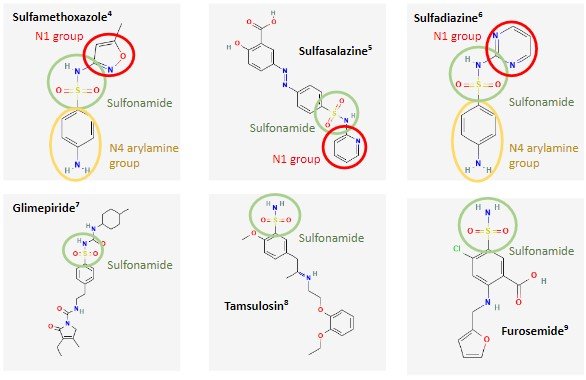
Sulfonamide antibiotics contain arylamine side chains
Non-antibiotic sulfonamides generally do not.
Therefore true immunologic cross-reactivity is rare.
Practical ICU Implications
Patients allergic to Trimethoprim-sulfamethoxazole can generally receive:
Furosemide
Bumetanide
Torsemide
Acetazolamide
Celecoxib
Key Takeaways
Sulfa allergy does not automatically prohibit loop diuretics.
True cross-reactivity is uncommon.
This concern is often overstated.
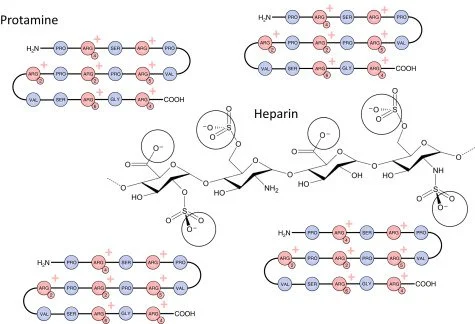
The positive charge of protamine binds it ionically to heparin. Reference.
Protamine Allergy
Classification: Zorse
What Is Protamine?
Protamine sulfate reverses unfractionated heparin.
Its mechanism is elegant:
Heparin is one of the most negatively charged biological molecules.
Protamine is one of the most positively charged naturally occurring peptides.
The two bind electrostatically and neutralize one another.
Origins
Protamine was historically isolated from atlantic Salmon sperm
The original compound was called Salmine
Modern preparations are recombinant.
How Common Are Reactions?
General population ~0.06–0.1% (rare overall).
However, risk rises dramatically in certain groups.
Patients with fish allergy have substantially elevated risk.
Prior Protamine Exposure (prior cardiac surgery, or NPH insulin)
NPH = Neutral Protamine Hagedorn
Protamine prolongs insulin activity.
Repeated exposure may produce sensitization.
Reported reaction rates Up to 27%
Vasectomized Patients
One of medicine's stranger immunology facts.
Normally sperm antigens are protected by immune privilege.
After vasectomy:
Sperm antigens may become exposed.
Antibodies can develop.
Some cross-react with protamine.
Why It Matters
Protamine is routinely administered in cardiac surgery, ECMO, etc
Failure to identify high-risk patients can have catastrophic consequences.
Protamine reactions are rare overall.
They are dramatically more common in three specific populations:
Fish allergy
Prior NPH exposure
Vasectomy history
This makes protamine allergy a classic zorse.
The Bottom Line
| Allergy / Condition | Classification | Why? |
|---|---|---|
| Alpha-gal Syndrome | Zorse | Much more common than clinicians realize; increasing prevalence due to expanding Lone Star Tick range. Often misdiagnosed as GI disease, food intolerance, or unexplained allergy. |
| Latex-Fruit Syndrome | Zorse | Cross-reactivity between latex and fruits (avocado, banana, kiwi, chestnut, etc.) is surprisingly common, especially among patients with latex allergy. |
| PA Catheter Latex Anaphylaxis | Hebra | Frequently feared, but documented reactions are rare despite widespread use of latex-containing catheter components. |
| Propofol + Egg Allergy | Unicorn | Egg allergy is not a contraindication to propofol; the formulation contains egg lecithin, not the proteins responsible for most egg allergies. |
| Propofol + Soy Allergy | Unicorn | Refined soybean oil lacks the proteins that typically trigger soy allergy. |
| Propofol + Peanut Allergy | Unicorn | No meaningful evidence supports avoiding propofol in peanut-allergic patients. |
| Shellfish Allergy = Contrast Allergy | Unicorn | Shellfish allergy is caused by proteins such as tropomyosin, not iodine. Shellfish allergy does not predict contrast reactions. |
| Iodine Allergy | Unicorn | Humans cannot be allergic to elemental iodine, which is an essential nutrient required for thyroid hormone production. |
| Jod-Basedow Syndrome | Zorse (possible) | Iodine-induced hyperthyroidism is uncommon but likely underrecognized given the enormous number of patients exposed to contrast and amiodarone. |
| Sulfa Cross-Reactivity | Hebra / Unicorn | Cross-reactivity between sulfonamide antibiotics and non-antibiotic sulfonamides is extremely uncommon. |
| Loop Diuretics in Sulfa Allergy | Unicorn | Furosemide, bumetanide, and other non-antibiotic sulfonamides are generally safe despite common misconceptions. |
| Protamine Allergy (General Population) | Zebra | True reactions are uncommon overall (~0.06–0.1%). |
| Protamine Allergy in Fish Allergy | Zorse | Risk is substantially higher than most clinicians appreciate. |
| Protamine Allergy in NPH Insulin Users | Zorse | Prior exposure can sensitize patients; reported reaction rates may approach 10–27% in some series. |
| Protamine Allergy in Vasectomized Patients | Zorse | Development of antisperm antibodies may increase risk through cross-reactivity with protamine. |
The overarching lesson is that allergy history often contains as much mythology as immunology. Some reactions we dismiss as exotic are surprisingly common (NPH and protamine, fruit and latex), while others that trigger EHR warnings and clinical anxiety (egg and propofol, shellfish and contrast) are largely fictional. Understanding which are zorses, which are hebras, and which are unicorns can help ICU clinicians make better decisions, avoid unnecessary treatment delays, and recognize important diagnoses they might otherwise miss.