
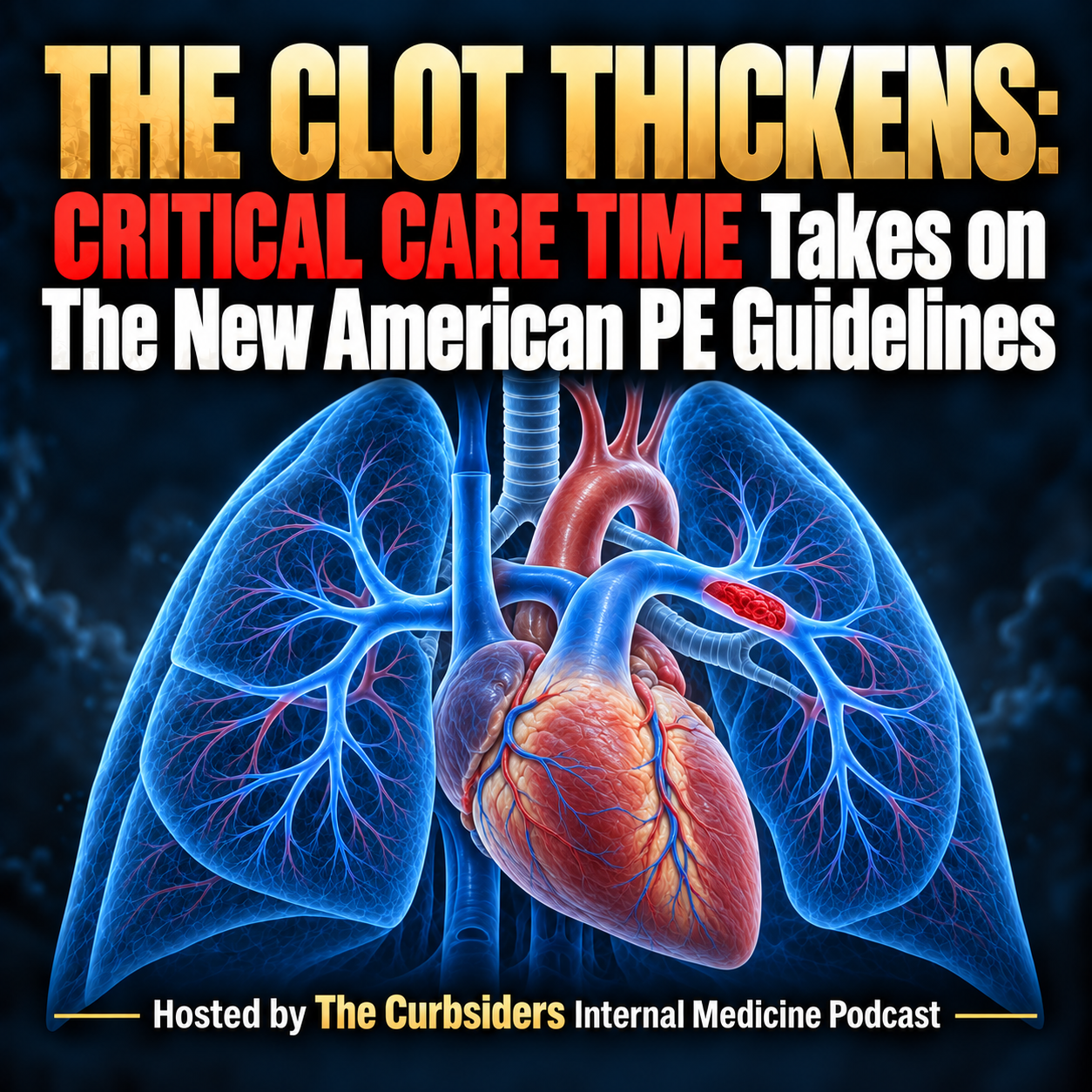
On this week's episode, Critical Care Time gets Curbsided! Cyrus and Nick are hosted by Drs. Matthew Watto and Paul Williams of The Curbsiders Internal Medicine Podcast where they unpack the 2026 AHA/ACC multisociety pulmonary embolism guidelines and how they may effect your practice. During the course of our discussion, we unpack the new A–E clinical categories, revisit cryptic shock in the setting of PE, and review diagnostic testing, anticoagulation choices, and of course - when to call in the PE response team. Of course we also talk treatment options and delve into post-acute management of PE and what the guidelines say about CTED, etc. New categories, evolving evidence, and plenty of bedside perspective: this crossover connects critical care decisions with the questions that follow patients into clinic.
Diagnosis: Use PERC for very-low-risk patients, D-dimer/YEARS for low-to-intermediate risk, and CT pulmonary angiography (CTPA) for high clinical suspicion.
Risk stratification: The 2026 AHA/ACC guidelines introduce five PE severity categories (A–E), with additional subcategories and respiratory modifiers. RV dysfunction, biomarkers, and clinical trajectory help guide management.
Acute management: Early pulmonary embolism response team (PERT) involvement facilitates multidisciplinary decision-making. Low-molecular-weight heparin (LMWH) is generally preferred over unfractionated heparin.
Recognize deterioration: Shock can occur without hypotension. Rising lactate, worsening renal function, and declining urine output may signal impending cardiovascular collapse and prompt consideration of advanced therapies.
Long-term anticoagulation: Direct oral anticoagulants (DOACs) are preferred for most patients. Duration depends on provoking factors, recurrence risk, bleeding risk, and patient preferences. Reduced-dose DOACs are an option for extended treatment.
Follow-up: Persistent dyspnea beyond three months warrants evaluation for chronic thromboembolic pulmonary disease (CTEPD), typically beginning with echocardiography and a ventilation/perfusion (V/Q) scan.